

Hunger Rock symbolizes hard times for the local populace. In times of drought crops fail and ships stand at anchor, the river too shallow to navigate. In older times low water meant that supplies of salt were cut off as well. People carved records of these hard times into the rock mass. The oldest legible marking is dated 1616. An old German message on the rock sums it up well: Wenn du mich siehst, dann weine (When you see me, weep). A later Czech inscription reads: Neplac holka, nenarikej, kdyz je sucho, pole strikej (Don't cry, girl, don't fret. When it's dry, just spray your field wet).
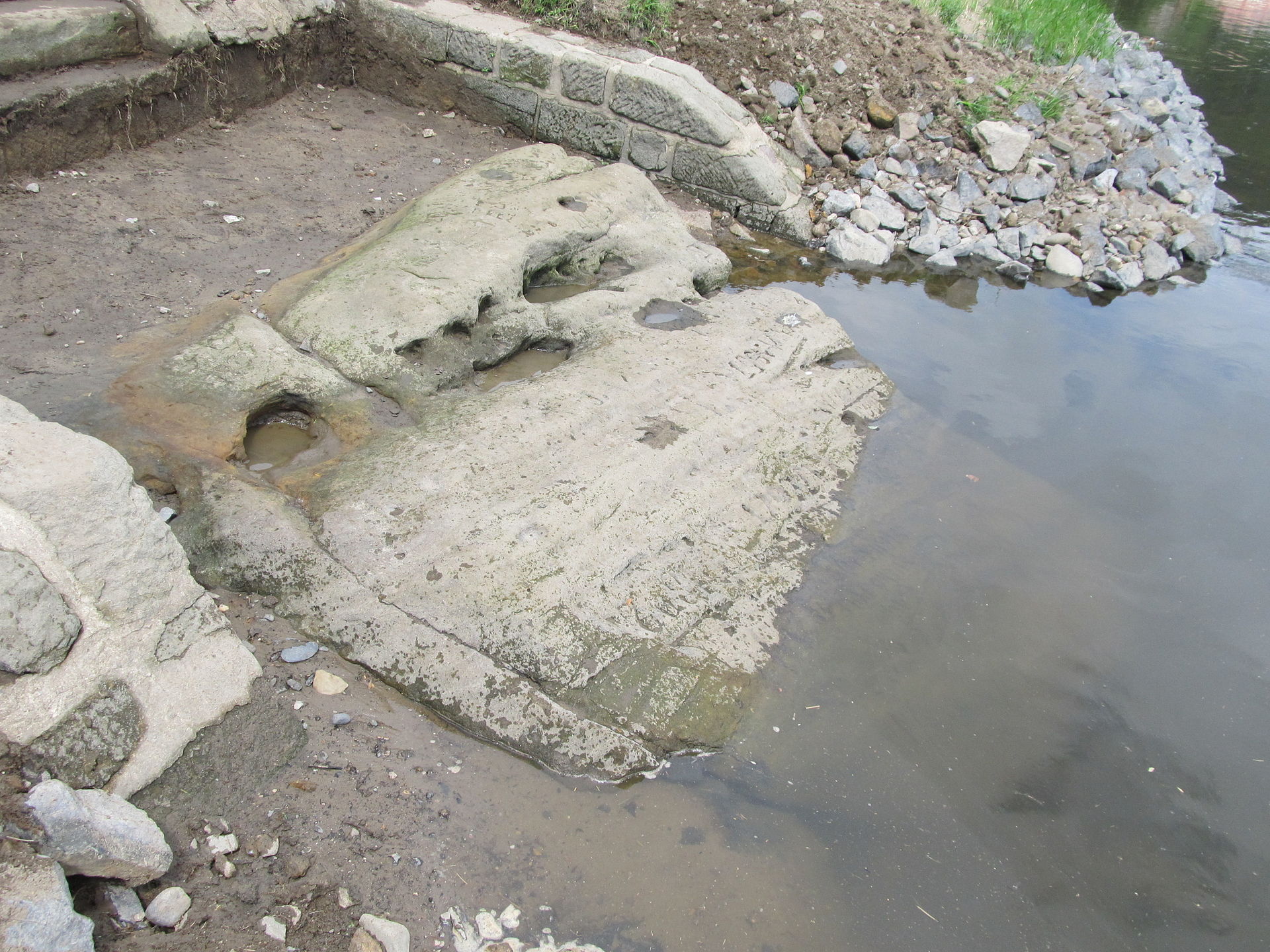
After the Moldau was dammed in 1926, the rock made its appearance more often. Today it is visible on an average of 126 days every year. Should a dam ever be built below Decin (attempts to launch such a project date back to 1653), the rock mass would disappear forever under the water's surface. Would that ring in a golden era?

The bank near Hunger Rock was paved in 1911. In 1994 the rock itself was cleaned and made more accessible to the public.
Hunger Rock is one of the oldest hydrological landmarks in central Europe.

Getting there