

The church is a national protected cultural landmark.
In the 15th century John of Wartenberg, then lord of the Decin estate, had a small church built near this site, just beyond the eastern gate. It is mentioned in documents in 1530.
A local legend tells the tale. Lord Wartenberg and his family are said to have been travelling by carriage in the hill country nearby. Their horses suddenly spooked, nearly casting the hapless travellers into the ravine below. The mad dash ended when the frightened animals pulled up short at a wayside cross. Everyone was saved. Wartenberg had the cross brought to Decin and built the church to house it.
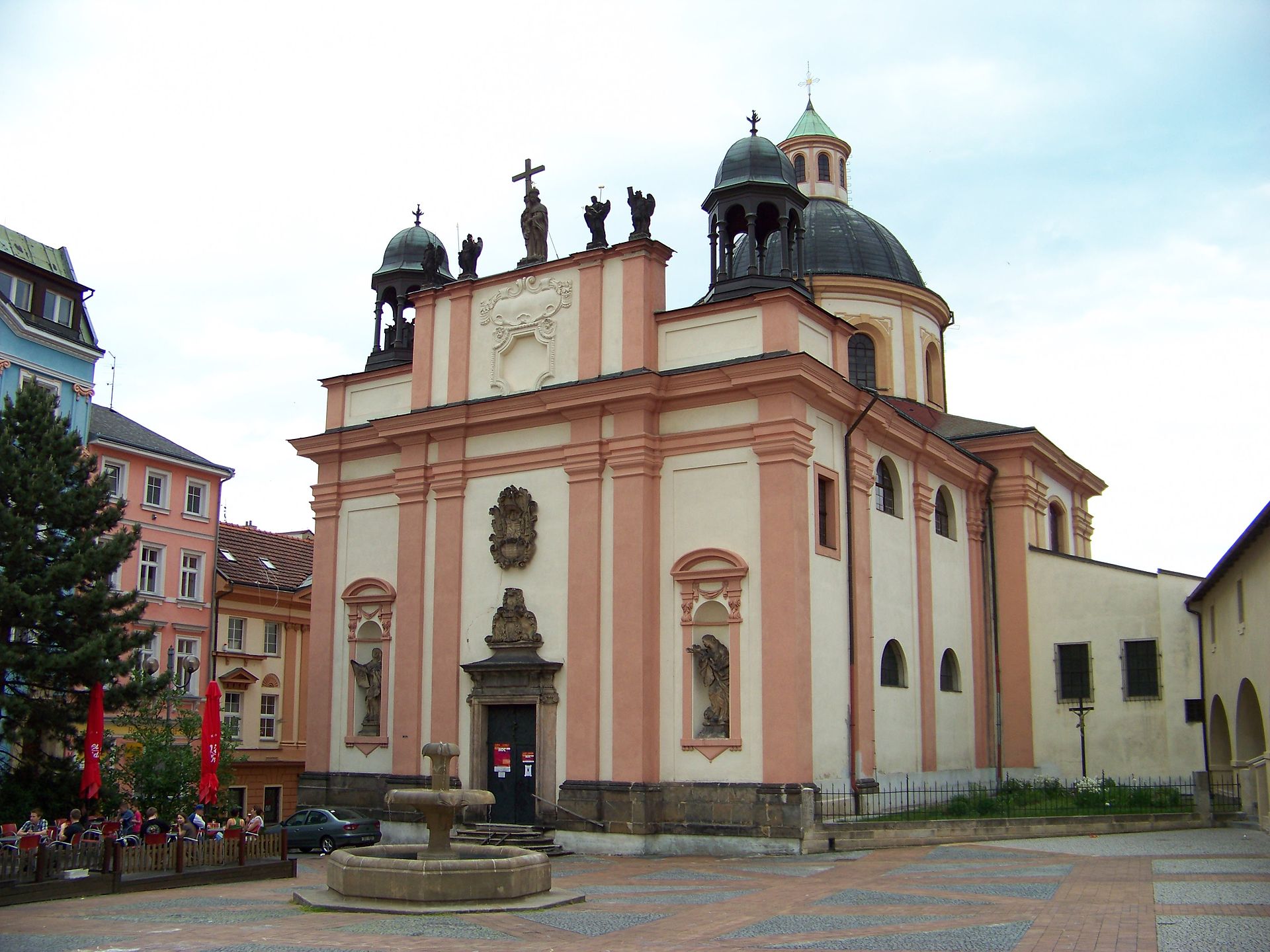
The church that stands here today dates from the 17th century. Count Maximillian Thun-Hohenstein acquired three townhomes and had them demolished to make way for the new building in 1665. The corner stone, a sandstone outcropping extending 2 meters out of the bedrock, is visible on the church's eastern wall. It bears a Latin inscription that translates as follows:
| „ |
The corner stone of this church was laid by the creator himself and was christened on 15 August 1691 by Count Johann Ernest Thun, Prince Archbishop of Salzburg, legate of the Holy See, etc. The corner stone was blessed on the day of the sanctification of the church. |
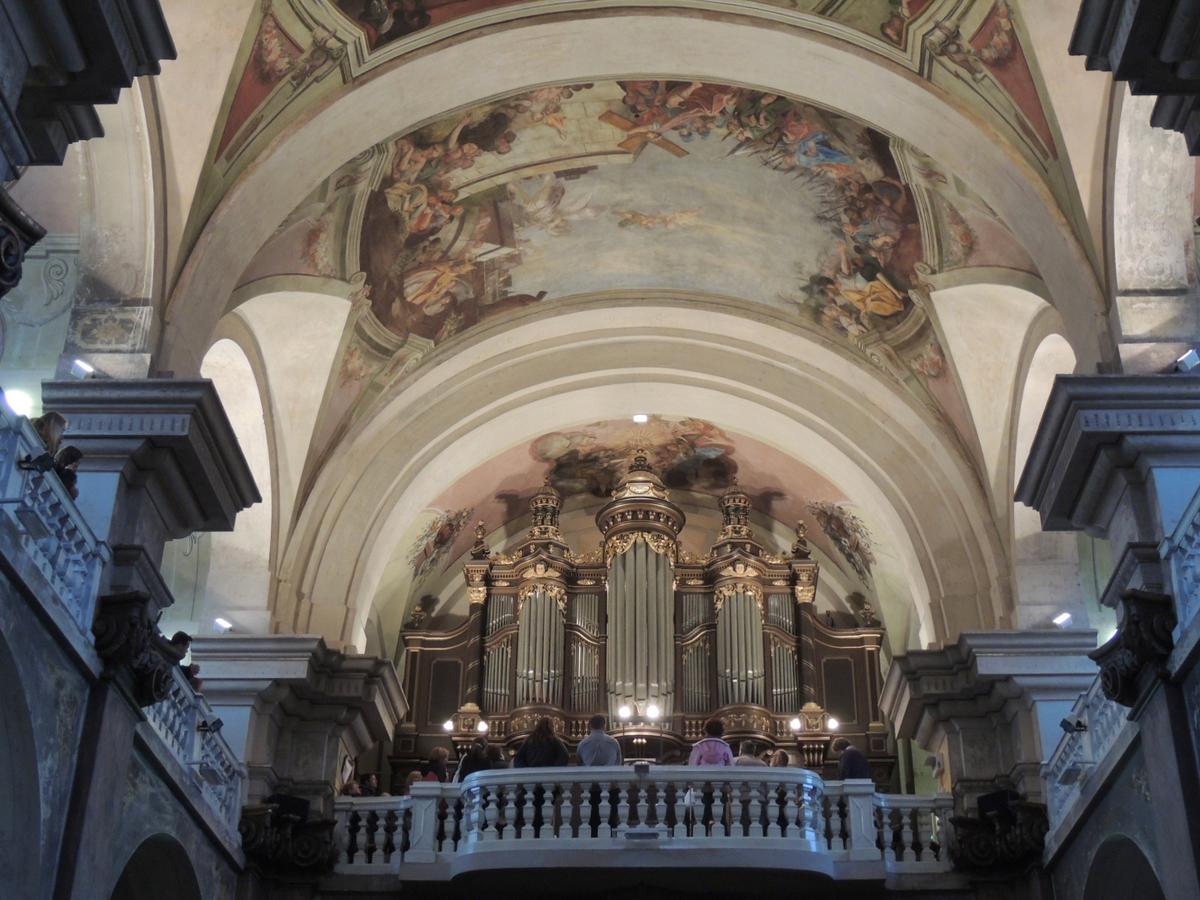
The building echoes the style of Saint Peter's Basilica in the Vatican. The influence of Salzburg church architecture and its Italian precursors is also evident. There are three parallel naves separated by great pillars and a transeps running across. A dome rises above the point where they cross (the tip of the cross atop the copula is 39.82 m high). There are galleries over the side naves. One section of the gallery, set aside for the church patron, is joined to the castle by a covered passage. The church exterior and interior ornamentation tells the story of the Holy Cross. A massive crucifix of brown Salzburg marble rises above the main altar (8.77 m high); on this cross is set a wooden cross that, according to existing chronicles, comes from the original church of the Holy Cross built by John of Wartenberg.
In 1744 the city was engulfed by a great fire that partially damaged the church as well; the altar on the right side with its painting of the Virgin Mary by the great Baroque painter Karl Skreta was destroyed. The work was replaced by a painting by local painter Benedikt Kern. The parish church, Saints Wenceslas and Blasius, was burned down and parish masses were relocated to the Church of the Holy Cross. In 1826 it became a parish church.
On the occasion of the 100th anniversary of the church in 1791, Count Vaclav Josef Thun-Hohenstein commissioned a former Jesuit, Josef Kramolin, to decorate the church interior in frescoes. The fresco in the presbytery represents the crucifixion of Jesus Christ, that in the copula shows the discovery of the holy cross by the empress St. Helen (150 figures), and the frescoes above the main hall portray the ascension of the holy cross, for which the church is named.
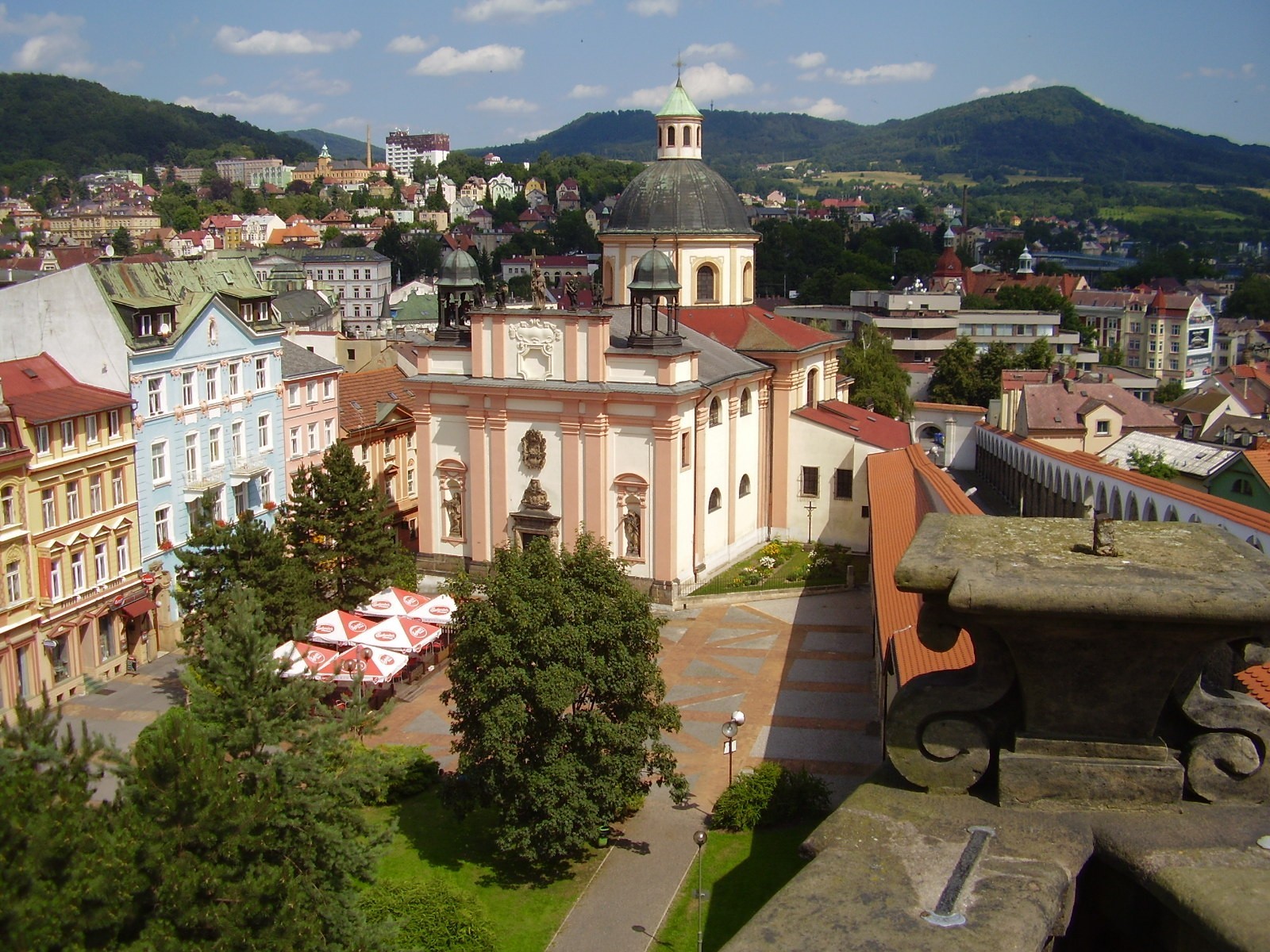
On the church wall against the Long Drive is the Chapel of the Virgin Mary of the Snows, which it is said once stood on the cemetery by the Church of Saints Wenceslas and Blasius and was moved here in 1749 after the great fire of that year. In 1752 a portrait of the Virgin Mary, blessed by Pope Benedict XIV, was brought from Rome, increasing the status of the chapel.
Where is it? Krizova ulice, Decin

Getting there